
Maha Saman Dewalaya
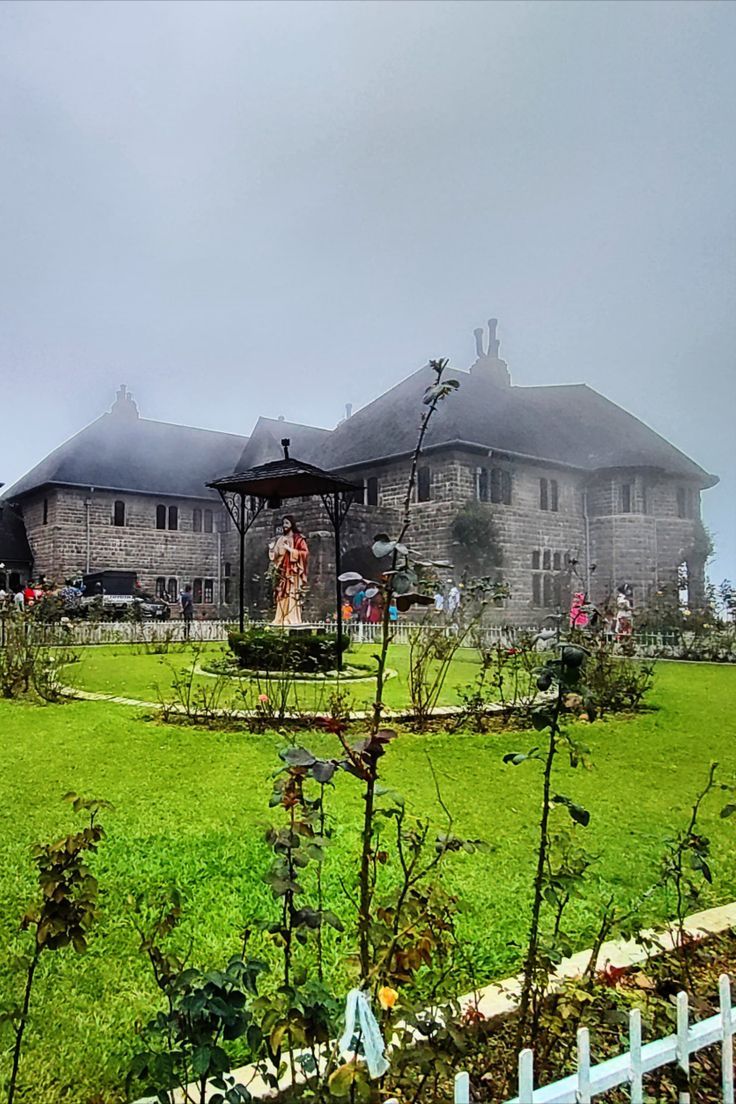
The Maha Saman Devalaya (also known as the Sri Sumana Saman Devalaya) in Ratnapura is one of the most significant and historically rich religious sites in Sri Lanka, second only in importance for the deity Saman to the shrine at the summit of Sri Pada (Adam’s Peak).
It serves as the main shrine dedicated to the deity Saman (Sumana Saman Deviyo), who is regarded as one of the four guardian deities of Sri Lanka and the patron god of the Ratnapura (Sabaragamuwa) province and the sacred mountain of Sri Pada.
Historical Significance and Resilience
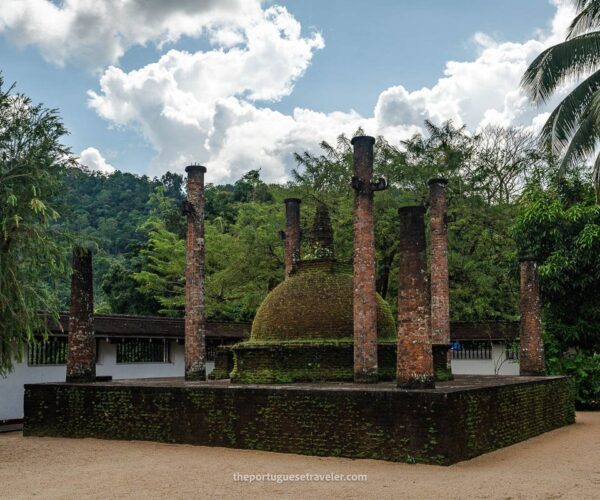
- Ancient Roots: The site’s religious history dates back to the Anuradhapura Kingdom (circa 2nd Century BCE), with records mentioning a Buddhist temple called Saparagama Maha Viharaya existing on the premises.
- The Deity: Saman is believed to have been a chieftain or district administrator of the area contemporary with the Buddha. According to legend, he met the Buddha on the latter’s first visit to Sri Lanka, became a follower, and asked the Buddha to leave his footprint on Sri Pada, which has been a site of pilgrimage ever since. After his death, he was deified.
- Destruction and Rebuilding: The original temple built for the deity in the Dambadeniya period (13th Century) was destroyed by the Portuguese invaders in the early 17th century, who built a fort and a church on the site.
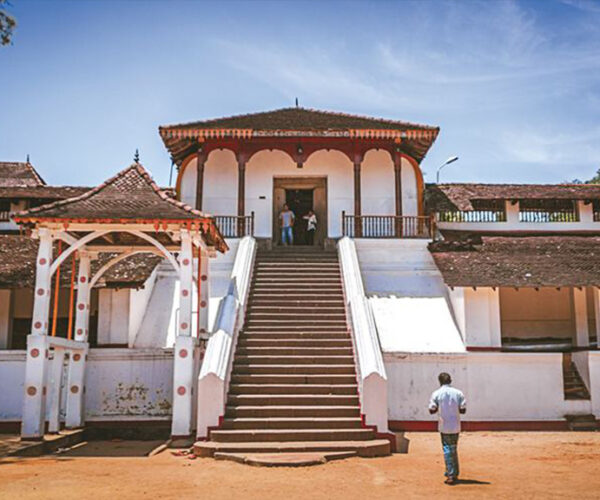
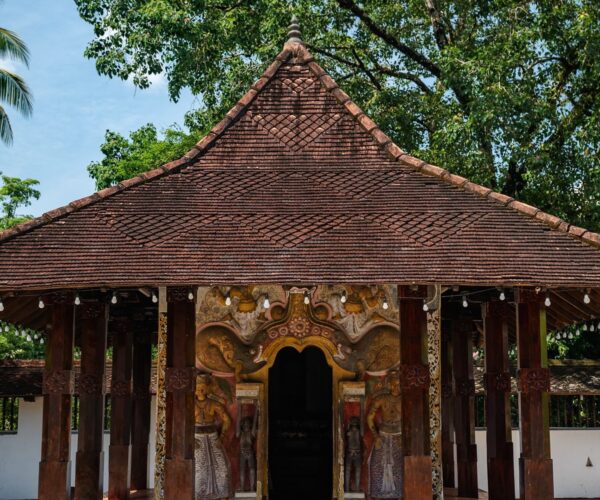
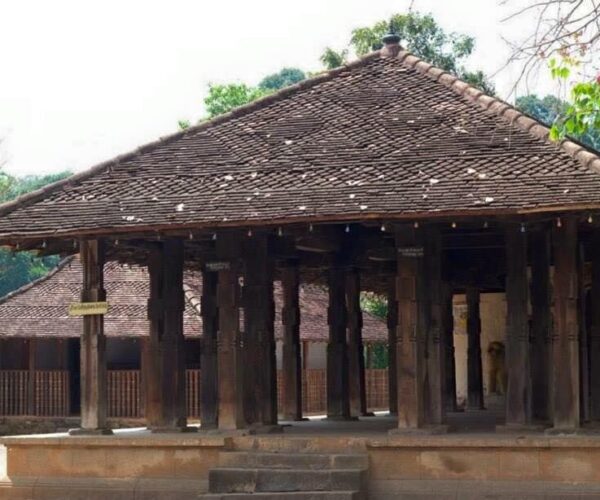
- Rebirth: The current structure is attributed to King Keerthi Sri Rajasinghe of the Kandyan Kingdom (18th Century) after he recaptured Ratnapura, tore down the fort, and restored the shrine to its former purpose. The architecture largely follows the grand, traditional Kandyan style.
Architecture and Features
The Devalaya complex is vast and impressive, consisting of several courtyards and shrines on different levels:
- The Processional Way: A long path leads up to the complex.
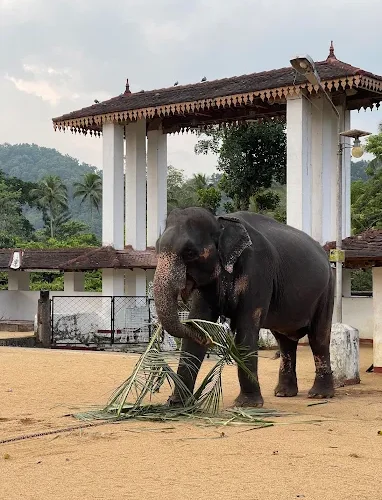
- Outer Courtyard: This is a large, open area where elephants are traditionally dressed for the annual procession.
- Inner Quadrangle: Accessed by a flight of stone steps, this area houses the main shrines.
- Main Shrine (Maha Devalaya): A multi-storeyed structure, often called the “Palace” (Maligawa), which houses the image and insignia of God Saman. He is typically depicted holding a lotus bloom and is often associated with a white elephant.
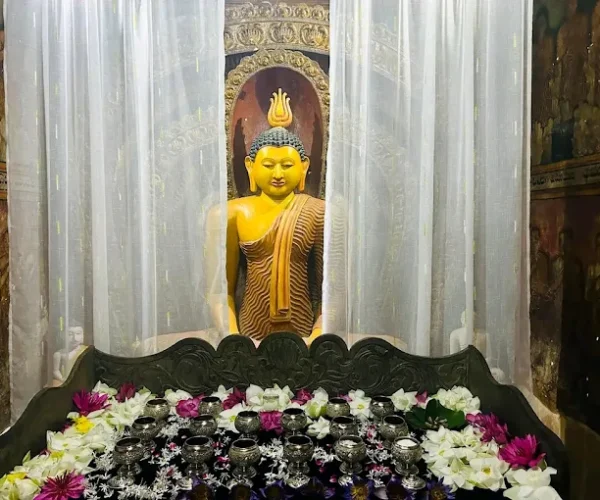
- Subsidiary Shrines: The complex also contains shrines dedicated to the Buddha and other deities, such as the goddess Pattini, reflecting the blend of Buddhist and local deity worship in Sri Lanka.
- Portuguese Relic: A curious historical artifact remains near the entrance: a sculptured stone from the Portuguese era that portrays a Portuguese soldier trampling a Sinhalese warrior, a grim reminder of the colonial history of the site.
The Annual Esala Perahera
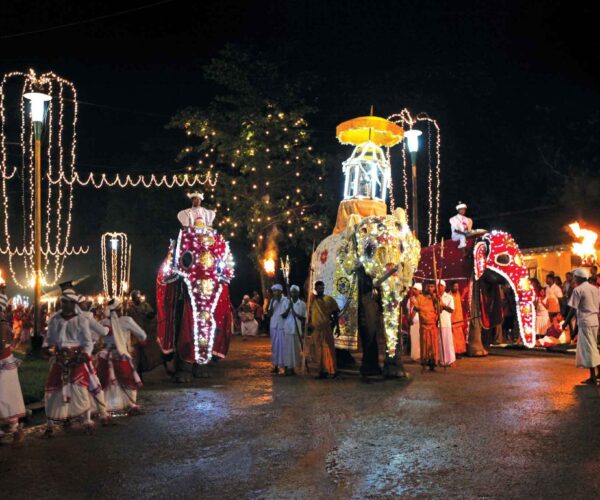
The most famous event associated with the Devalaya is the Sabaragamuwa Maha Saman Devalaya Esala Perahera (procession). Held annually in the month of August/September, it is considered one of the grandest cultural and religious pageants in Sri Lanka, second only to the Kandy Esala Perahera. The festival features:
- Magnificently decorated elephants.
- Traditional Kandyan, Sabaragamuwa, and low-country dancers.
- Drummers, torch bearers, and various cultural acts.
- It culminates with the Diya Kapeema (water cutting ceremony) in the Kalu Ganga (Black River) nearby.
Why go?
The ruins offer a spectacular glimpse into a golden age, showcasing an incredible fusion of ancient Sinhala and South Indian architectural styles. Key attractions include the impressive remnants of the Royal Palace Complex of King Parakramabahu, once seven stories high, and the elaborate Sacred Quadrangle (Dalada Maluva), which houses the island’s most concentrated collection of religious structures. Among these are the beautifully preserved circular relic house, the Polonnaruwa Vatadage, and the towering, brick-built image house, the Lankatilaka Vihara.
Tour Highlights
- Holiday with friends & family.
- As many activities & excursions as can be fitted in to your trip.
- Go any day of the week and most times of the year.