

Star Fort Matara
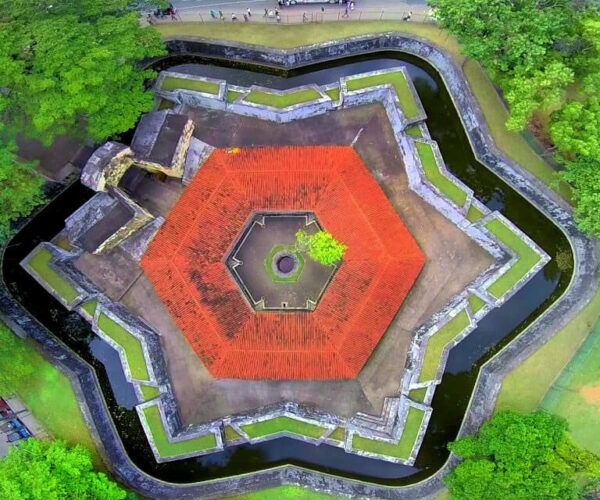
Star Fort Matara is a small but strategically significant coastal fortification built by the Dutch in the 18th century. It stands as a compelling architectural feature and a testament to the defensive planning of the Dutch colonial era in Matara.
Unique Features and Experience
The fort’s distinctive geometry and well-preserved colonial details make it a fascinating historical landmark, serving as a protective out-post for the main Matara Fort.
The Unique Six-Pointed Star Design:
- Architectural Marvel: Built between 1763 and 1765, the fort is one of the most uniquely designed colonial fortresses on the island. Its shape is a perfect six-pointed star, a classic Dutch military engineering design known as a redoubt (originally called Redoute Van Eck).
- Strategic Purpose: The Dutch constructed the Star Fort after the 1761 Matara Rebellion, which exposed the main Matara Fort’s vulnerability to attacks from the inland and the Nilwala River. The star shape allowed for the strategic positioning of 12 large cannons to cover approaches from all directions, ensuring 360-degree defensive capability.
Colonial Relics and Architecture:
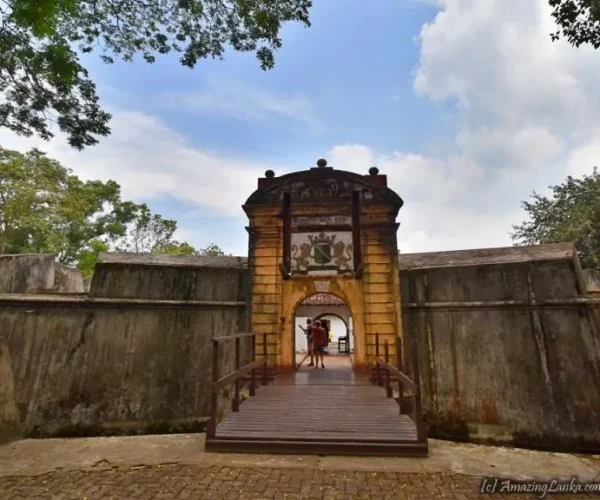
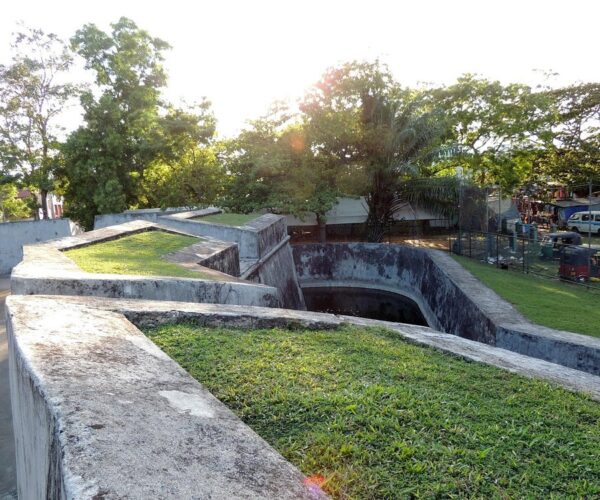
- The Moat: The fort is surrounded by a deep, wide moat (originally 6 meters wide and 3.1 meters deep), which was once spanned by a drawbridge and may have even held crocodiles as an additional protective measure (though this is disputed).
- Entrance Arch: The main entrance gateway is built from coral and granite and is emblazoned with the construction date (1765), the insignia of the VOC (Dutch East India Company), and the coat of arms of Dutch Governor Lubbert Jan van Eck, whom the fort was originally named after. Two lion carvings flank the gate.
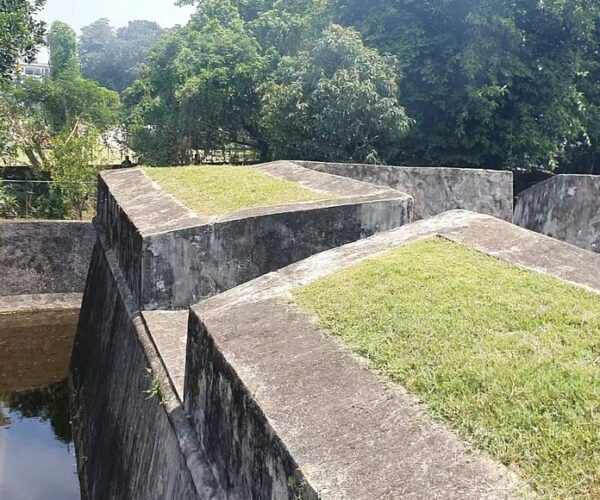
- Construction: The rampart walls are robust, constructed from granite rock and coral, and were built to hold a small garrison, ammunition, and food supplies.
The Archaeology Museum:
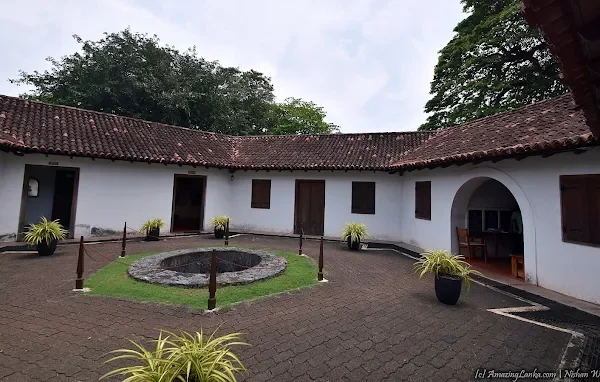
- Historic Exhibition: Today, the fort houses a small archaeological museum managed by the Department of Archaeology. The museum contains modest but informative displays, artifacts, maps, and photographs relating to the history of Matara and the Dutch colonial period in the Southern Province.
- Internal Features: Inside the fort, visitors can view restored structures, including the soldiers’ quarters, two small prison cells, and the central deep water well which supplied the garrison.
Visitor Experience:
- Rampart Walk: Visitors can walk along the narrow ramparts of the star, offering unique vantage points for photography and a view of the surrounding city and the Nilwala River.
- Compact History: The fort is small and compact, making it an excellent, quick stop for history enthusiasts and architects. A visit typically takes 30 minutes to an hour.
Climbing Note: The fort is easily accessible in the heart of Matara town, near the main Matara Fort. It is a walk-through site, not a challenging climb, but best visited in the cooler morning or late afternoon hours.
Why go?
The fort’s distinctive geometry and well-preserved colonial details make it a fascinating historical landmark, serving as a protective out-post for the main Matara Fort.
Tour Highlights
- Holiday with friends & family.
- As many activities & excursions as can be fitted in to your trip.
- Go any day of the week and most times of the year.